
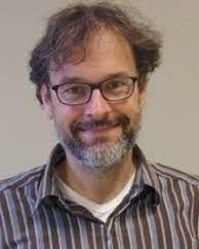
Prof. Dr. Michel Mandjes
zaterdag 7 maart 2026
Netwerken in beweging: wiskunde van structuur, toeval en dynamiek
Every day you are — often without you knowing — part of all kinds of networks. Think of social networks, transport systems, communication structures, or even biological processes. What fascinates mathematicians is that all these different networks are often surprisingly similar when you look at them through mathematical glasses.
In this lecture I show how mathematicians use stylized models to analyze complex networks. Such networks often have a whimsical, constantly changing structure. It is therefore obvious to describe their evolution using a stochastic process. But that is not all: the network is also used in an unpredictable way, leading to a second layer of stochastic dynamics. — an interaction between structure and use that makes the analysis extra challenging.
Two striking examples illustrate this well. The first concerns the dissemination of information, news or opinions through a social network that also changes over time. In the second example, traffic flows through a road network in which maximum achievable speeds fluctuate — for example by accidents or weather conditions — while congestion in turn affects those speeds. In both cases it is about systems in which coincidence, interaction and dynamics come together on multiple levels.
Since 2023 Michel Mandje has been Professor of Kansaccount and Operations Research at Leiden University (UL). Mandjes was the project leader and main applicant of the large-scale NWO gravity program NETWORKS, in which networks were analysed from probability and algorithmics. This program was a collaboration between UvA, UL, CWI and TU/e. Within the UL, he runs the Centre for Complex Networks. In addition, he has spent sabbaticals at Stanford and NYU, and performs extensive editorial functions at various scientific journals.

